
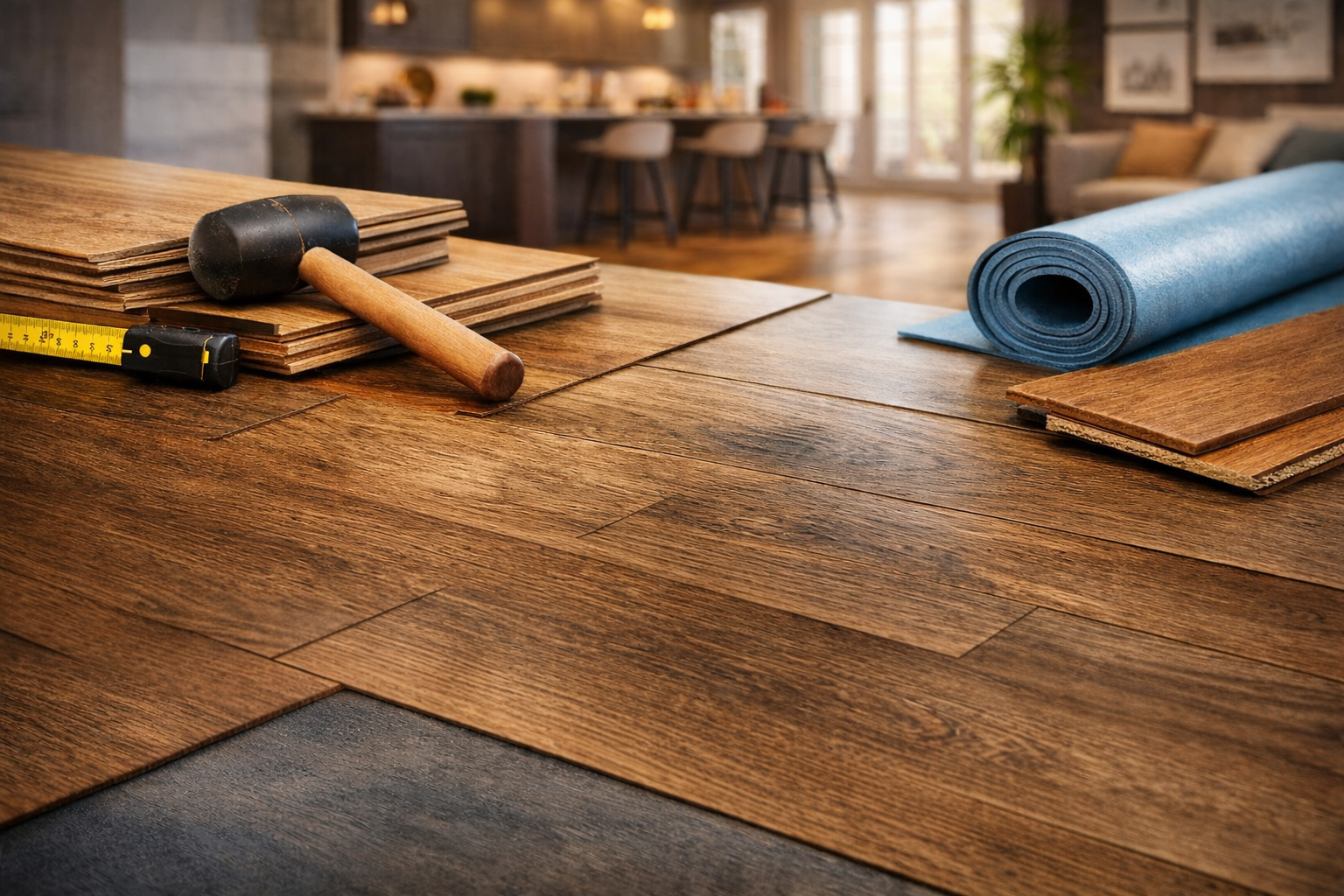
Article-first layout with product-style highlights (spec blocks, badges, room suitability & FAQ) — no cart / no ecommerce UI.
If you are looking for a good alternative to natural flooring, laminate can be a good option for UK homes without breaking the bank. A durable laminate flooring is ideal for most busy family homes, rental properties, and high-traffic areas.
However, with many options in the market, it is essential to know what makes this flooring type really high-quality. In general, AC ratings, plank thickness, and, in modern times, water resistance with realistic surface finishes are the core factors that determine comfort, longevity, and overall style.
This guide will help you find the best laminate flooring in the UK, based on thickness, durability, locking system, and practical advice for installation and maintenance.
Whatever you are planning for upgrading your room, office, kitchen, or hallway, this discussion will help you make a confident choice.
We will also cover the comparisons of engineered wood and vinyl wood to save you any guesswork.
Let’s dive in:
What is the best laminate flooring in the UK?
AC ratings (abrasion class) are the core determinant of a laminate floor’s quality rather than appearance. This standard indicates how well the flooring can withstand wear, stains, traffic, and burns.
The higher the AC rating (AC4, AC5, or higher), the more durable and suitable the laminate flooring will be for heavy use.
Plank thickness, water resistance, and the locking system are also key factors in determining laminate flooring quality.
Overall, for most UK homes, the top recommendations for laminate flooring are:
- AC4 or AC5 rating – suitable for heavy foot traffic and long-term durability. However, for residential use, an AC3 is enough, while AC4 and AC5 are recommended for commercial use.
- 8–12mm thickness –Works well with underlay and provides underfoot comfort.
- Water-resistant finish – Perfect for kitchens and damp areas (check manufacturer’s guidance for bathrooms).
- Click-lock system – ensures straightforward installation and tight-fitting planks, minimising gaps.
By prioritising these qualities, you can pick your laminate flooring that balances appearance and durability.
What makes laminate flooring ‘the best’?
In the previous section, you learned that the quality of laminate flooring is determined by AC ratings, thickness, finish, and locking system. Now we will know more in detail about these factors.
AC Rating / Abrasion Class (AC3 vs AC4 vs AC5)
AC ratings are a core indicator of durability. It measures the floor’s wear and tear.
Here is the classification:
- AC3: AC3 is ideal for light-use areas such as bedrooms, living rooms, and low-traffic areas.
- AC4: AC4 is used in busy residential and light commercial areas
- AC5: Recommended for heavy-duty performance
Thickness (6–7mm vs 8mm vs 10mm vs 12mm vs 14mm)
Laminate thickness plays a crucial role in stability.
- 6–7mm: Feels thin and less stable, but a budget-friendly option for low-traffic rooms.
- 8mm: Standard choice for solid underfoot and works with most underlays.
- 10mm: Provides extra comfort and stability with better sound insulation.
- 12mm: Premium feel and comes with impact resistance; almost closer to real wood.
- 14mm: Recommended for high-end installation.
However, AC resting and thickness alone cannot determine durability; core quality is another vital factor.
Let’s know more about the core quality:
Core Board Quality (HDF & Edge Sealing)
- Strength and stability – Protects planks from bending or warping.
- Moisture resistance – risk of swelling. Significantly in a sealed edge and reduces the swelling risk.
- Longevity – the years. Maintains shape and appearance for a long time.
When evaluating laminate, always check if edge sealing is included, especially for kitchen or hallway use, where spills or dirt can accumulate.
Locking System & Joint Sealing (Click Systems, Bevels, Waxed Joints)
A proper locking system is essential for a durable floating floor. Typically, the click lock system is the most common; bevel and waxed joints are also used.
Here are the details:
- Click-lock systems: Suitable for DIY and easy installation, and make a tight fit. Moreover, it planks snap together.
- Bevelled edges: Give a natural wooden appearance, but a downside is that it attracts dust. However, regular cleaning can avoid the issue.
- Waxed or sealed joints: Ideal for kittens, especially for damp-prone rooms.
In UK homes, seasonal humidity can affect the flooring, where a good locking is essential to keep the laminate contract safe without buckling.
Quick Room Comparison Table
| Room | Recommended Type | Why It Works |
|---|---|---|
| Kitchen | Water-resistant laminate (AC4+) | Handles spills + daily traffic |
| Bathroom | Water-resistant/waterproof ranges only. | Manages moisture with careful installation |
| Hallway | AC5 / textured finish. | Withstands heavy foot traffic |
Best Laminate Thickness (UK Buyer Guidance)
When comparing the best laminate flooring UK homeowners are considering, thickness is often one of the first specifications people look at.
However, thickness alone does not determine quality.
Check AC ratings besides thickness.
For example, for any light-duty use, AC3/AC4 laminate flooring is enough with a minimum thickness.
Heavy-duty areas such as commercial spaces, or busy home needs more thickness and a higher AC rating.
8mm vs 12mm Laminate Flooring — How to Choose
- 8mm performs well for light use, such as it could be a good option for hallways.
- On the other hand, a 12mm laminate flooring gives a much premium feel and comfort, recommended for heavy-duty use.
However, thickness alone does not determine quality.
Check AC ratings besides thickness.
Underlay & Underfloor Heating: What You Actually Need
One of the most common questions buyers ask is: Do you need underlay for laminate flooring? In almost all floating floor installations, the answer is yes.
The underlay sits between the laminate and the subfloor. It improves comfort, reduces noise, and helps compensate for minor subfloor imperfections. In many cases, it also provides essential moisture protection.
If your home has a concrete subfloor, particularly on the ground floor, moisture control becomes critical. In these situations, an underlay with a built-in damp-proof membrane is usually recommended. Without it, moisture from below can affect the laminate core over time.
For timber subfloors, the focus shifts more towards sound insulation and stability. Ensuring that the subfloor is secure and level before installation is just as crucial as the underlay choice.
A common mistake is using carpet underlay beneath laminate. This practice can cause instability, joint movement, and reduced heating efficiency. Always choose an underlay designed explicitly for laminate flooring systems.
Laminate vs Other Floors (Quick Comparison)
Many buyers researching the best laminate flooring UK options are also comparing alternatives such as vinyl, engineered wood, and carpet.
Here’s a practical comparison:
| Feature | Laminate | Vinyl / LVT | Engineered Wood | Carpet |
|---|---|---|---|---|
| Water Resistance | Moderate (water-resistant ranges available) | High | Limited | Low |
| Durability | AC-rated surface | Durable and flexible | Can dent or scratch | Wears over time |
| Appearance: | Realistic wood designs, | Wide variety of styles, | Natural timber, | Soft textile finish |
| Comfort | Firm underfoot, | Slightly softer, | Natural warmth, | Softest |
| Maintenance | Easy | Very easy | Requires specialist care | Regular vacuuming |
When considering vinyl vs laminate flooring, vinyl typically offers better water resistance, making it attractive for bathrooms. However, laminate often provides a firmer feel and deeper wood texture.
Engineered wood flooring vs laminate comes down to authenticity versus practicality. Engineered wood uses real timber and offers natural character, but laminate is generally more scratch-resistant and cost-effective.
Laminate flooring vs carpet is a matter of preference. Carpet is softer and warmer, but laminate is easier to clean and better suited to allergy-conscious households.
Cleaning & Maintenance
Laminate flooring maintenance includes regular sweeping and vacuuming.
When choosing the best cleaner for laminate flooring, opt for a mild detergent or a manufacturer-approved product.
Avoid excess water; also, keep in mind that chemicals and excessive heat can damage the layer, joints, and durability.
With proper care and moisture management, high-quality laminate flooring lasts longer.
Why Choose FlooringRight.com for Laminate Flooring?
Choosing the right laminate flooring is often overwhelming. Most homeowners and renovators struggle to determine which AC rating and thickness level is right for their home.
At FlooringRight.com, we guide our clients in every specification to pick the right product according to their room demands.
We offer a wide range of plank formats, multiple design options, and finishes that can match your room accessories.
You will also get underlay and installation essentials in one place that simplify your buying process.
Our delivery options are available across the UK. You can also request samples and a free quote before the final buying decision.
Final Verdict
We can come to a point where three core principles determine the laminate flooring quality:
- AC rating
- Water resistance
- Thickness
AC rating addresses durability, water resistance for kitchen and spill areas, and thickness for overall comfort and stability.
Balancing these principles defines the best laminate flooring UK homeowners trust that offers the wood floor appearance and a strong performance.
To pick the best quality, ask for free samples and get a fitting quote. For expert advice, share with us your room type- is it a residential house, commercial place, or something else?